Hard Boiled Wonderland and the End of the World by Haruki Murakami

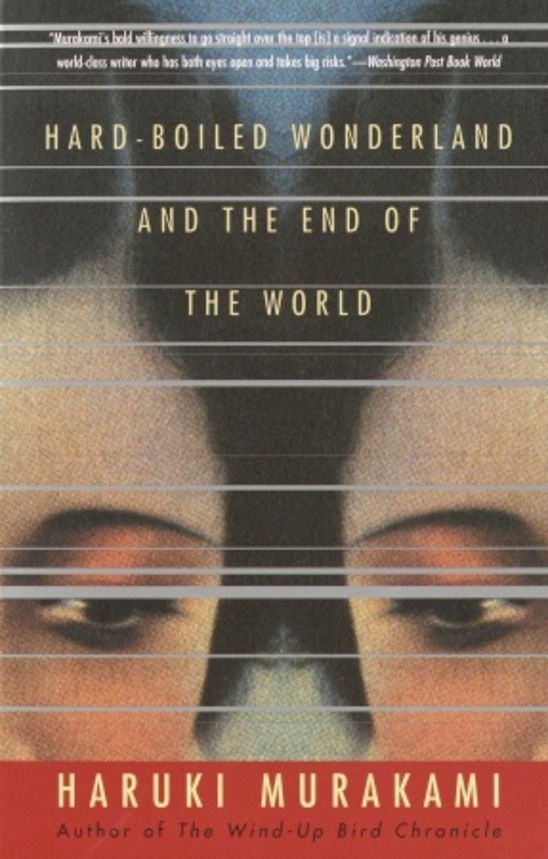
Hard Boiled Wonderland and the End of the World

Haruki Murakami is one of my favourite authors, though Hard Boiled Wonderland and the End of The World is the perhaps the most sci-fi-like of his novels that I’ve yet encountered. 1Q84 could be a contender, but I never found it so overt.  Perhaps that’s why Hard Boiled Wonderland seemed slow to start – because at first it was jarringly un-Murakami. It took me a while to get into this book, is what I’m saying.

So I was delightfully surprised when it did start to grab me, even more so when it really started being hard to put down toward the end. The last few chapters felt as though they dragged slightly, again, moving toward and ending that was wholly unsatisfactory, though I believe intentionally so.

At times this seems like a classic Murakami story with some sort of bizarre fantasy novel wedged in between chapters. The chapters alternate, one then the other, between tales set in the “real” world – Murakami’s recognizable if slightly skewed depiction of early 1990’s Japan – and in an isolated village with no modern technology at all, where unicorns roam, people’s shadows are sentient beings and dream-reading is an occupation. Yet they are two halves of the same coin, as is slowly revealed when the stories begin to converge. This is one of the best justifications I’ve seen for chapters that flip perspective, and the way the separate viewpoints slowly reveal themselves to be the same is subtle and brilliant, with enough clues in each version for the reader to draw mounting parallels.

Murakami, as usual, tends to fixate in an oddly clinical fashion on sex and other bodily functions. His descriptions of food and alcohol are sumptuous, and a moment where the main character’s collection of whiskey is destroyed was one of the most heartrending things I’ve read in some time.

Women in this universe unfortunately tend to be objects of desire for the main protagonist. We never meet one without getting a detailed description of an imagined sexual encounter, and those that are more than momentary passersby never quite seem to escape the protagonist’s vague fascination. The “main” female character, who we know only as the chubby girl, falls dangerously close to manic-pixie territory, though she seems to be saved by her unaided toughness in the face of adversity where our hero balks and cowers.

What at first seems to be the central storyline, the protagonist’s mysterious, government-operative occupation, is never really explored in more detail than that. He performs a job which involves complex encryptions and decryptions carried out by a part of his subconscious while his waking mind disassociates. The revelation that his abilities are the result of modifications made to his brain, and that he is the only survivor in a series of human experiments, should smack of campy 80’s action movie science, though when it is revealed it seems almost mystical. It’s very much a psychological thriller, though the divide between reality and the imagined world is clearly delineated and unambiguous.

For all his faults, we care about the main character, if only because he tends toward being a blank slate onto whom we project our social insecurity. In line with a large percentage of Murakami’s male characters, he’s in his mid-thirties, apathetic and minimally employed, though somehow with a fair chunk of disposable income. He’s divorced and this fact is treated as more an inevitability of life than a personal tragedy. As far as I know Murakami himself has been married for the duration of his writing career so I sometimes wonder about his fascination with divorced men – though perhaps it is his way of confronting the possibility of failure, creating numerous alter-egos to assess different possible reactions and outcomes.

At any rate, Murakami’s male characters always seem to have an autobiographical possession, whereas his women are more distinct. Despite what I said earlier about the female characters in this book, I do believe that this author is more than capable of writing interesting and realistic women. I’ve seen it in later works – Sputnik Sweetheart, 1Q84 and After Dark all feature women in main roles and when Murakami places them in the spotlight it’s real and effortless. Fittingly, when he treats them as afterthoughts and sexual objects it seems a bit contrived. So perhaps the treatment of women in this novel is a necessary aspect of the protagonist’s characterization. That’s an optimistic way of looking at it, anyhow.

For a novel that has the self-awareness to admit, through reference, its reverence of Albert Camus’ The Stranger, it does have its own internal logic that never falters, even when the plot doesn’t seem certain. All in all it was a worthwhile read, even inspiring at points. The ending, while abrupt, is divisive. Some, I’m sure, will see it as the most logical conclusion, while others, like me, will read the final page in slight disbelief, certain that another outcome was within reach.

A percentage of Amazon sales go toward keeping the blog running, so buy the book here: Hard-Boiled Wonderland and the End of the World

Plastic Beach: Snarkitechture at the National Building Museum

THE BEACH by Snarkitechture

The National Building Museum in Washington, DC, is hosting THE BEACH, from now until September 7th. A pity I live nowhere near there – but maybe this will inspire other installation artists to explore this kind of extreme interactivity in future works. THE BEACH is oddly commercialized and sleek, sort of an upper-middle-class, art hipster, yuppie paradise.  It’s also vaguely humorous (how can you not be, when you place a giant ball pit in the middle of a museum) and really seems like the sort of thing that you’d find in some sort of future dome-city where the real beaches have all been nuked off the planet and humanity splashes around in oceans of plastic balls. Maybe that’s what Snarkitechture was going for – a fun, lighthearted installation with a little bit of dystopic background static.

So about that ball pit. It IS huge, at 10,000 square feet, composed of almost one million recyclable plastic balls in a uniform translucent white. At the end of this ball “ocean” is a wall of mirrors   that play the role of a distant horizon, providing the illusion that the ocean goes on forever. The foggy, milky color of the ball pit as a whole is dripping with ultra-modern minimalist sensibility but it’s also the colour of so many plastic shopping bags – a fun parallel, considering what those do to the real ocean.

Brooklyn-based creators Daniel Ashram and Alex Mustonen have made THE BEACH in keeping with Snarkitechture’s usual style. They frequently do the stark black and white thing, playing with the aesthetic of a consumerist and design-oriented society. It’s not without humour – in installations like their ultra-sleek marble run for Art Basel at Miami Beach, and The White Room, made for a Chromeo album release and focusing on a series of “all white matte objects,” they really sell the idea that the future won’t be chrome, but stark white. They never lose their sense of humour but there is a palpable “evil megacorporation” undertone in many of their works. I dig it.

THE BEACH top view

It’s not all play – the National Building Museum (which I’ll admit I had never heard of before reading about this artwork) has boasted that its summer admissions sales have nearly tripled since last year with the installation of the work this summer. That’s just savvy business. So what about THE BEACH is attracting so many people? Obviously a ball pit that’s big enough for adults is a draw whether we want to admit it or not. But that’s a gimmick. Behind that, there’s an actual subversion of what people understand the museum space to be. When the general air of the museum is “look, don’t touch” – THE BEACH begs you to get all up in it,  sit on it, swim through it, throw bits of it at your friends.

It encourages guests to sit in chairs and idle on its shores, eat organic, fair-trade snacks from the Union Kitchen snack bar (acting as mock concession stand) – to just treat it like a real beach. All these activities seem to exist in a place of passive opposition to the traditions of a museum, where food is forbidden, guests glance at paintings and sculptures for a few seconds before moving on, and where touching any artwork is, obviously, strictly forbidden.

So you tell me: are Ashram and Mustonen building the synthetic beach in preparation for a future in which we can’t visit the real thing? Are they setting up a novelty in the here-and-now to have us look at it in 200 years and see it as a pale imitation of what once was? Probably not, but I’ll be damned if that isn’t in keeping with the dark, snarky humour that is the firm’s namesake.

An interesting side effect of inviting people into a touchy-feely space like this is that the sanitation issues that you should probably expect have also come into play. It’s minor fear-mongering for the most part. One case of pink eye, one cold, both that are only circumstantially tied to ball-pit exposure. The museum assures visitors that all of the balls in the pit are molded with antimicrobial agents, as well as being sprayed with antimicrobials and cleaned nightly. Now that’s what our beaches are missing – that alcohol smell of hand sanitizer. Imagine yourself safe in each milky white bubble! Each could represent a sealed antibacterial shell for the immune-challenged. Surely a few cases of contagious illness are preferable to shark bites, jellyfish stings, sunburns and sand in the shoes.

People swimming in THE BEACH by Snarkitechture

THE BEACH, the plastic beach, a wonderful, hilarious art piece and a chilling glimpse into one possible future. If you’re lucky enough to see it, enjoy it as a temporary fun afternoon – or go home unable to shake the feeling of slight sadness, like you’ve seen a premonition that you don’t quite understand yet. The determining factor – whether this piece is the future of museums or the future of beaches.

All images from Snarkitechture.com

Read my slightly less rambling coverage of the piece on The Speaker!

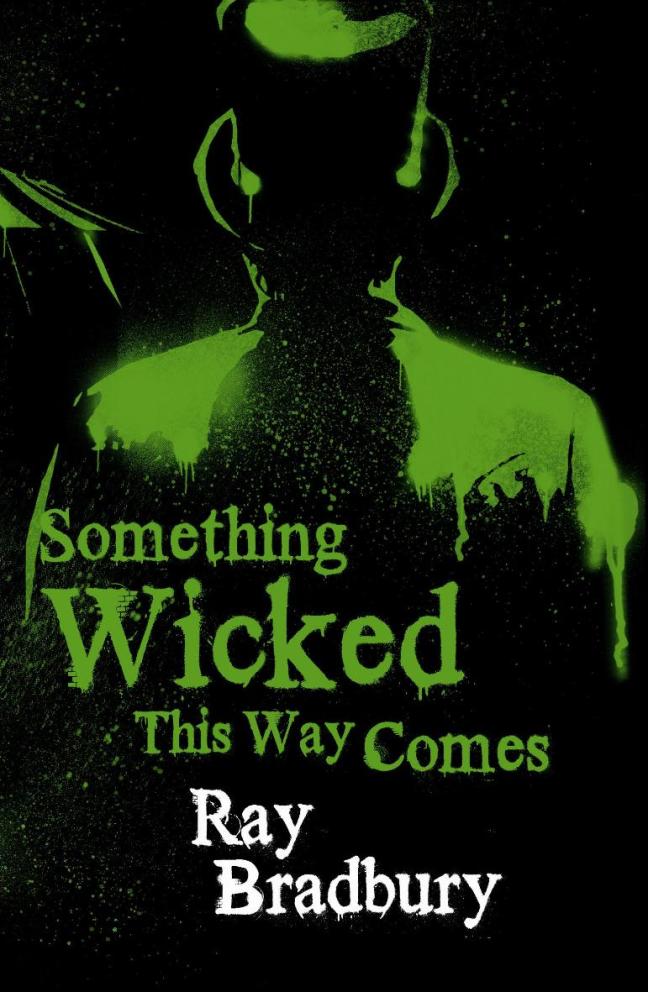
Something Wicked This Way Comes by Ray Bradbury

Something Wicked This Way Comes

August was an interesting time to read Ray Bradbury’s Something Wicked This Way Comes. I don’t think I know of any other books that so accurately portray the smell, appearance and general feel of autumn, particularly late October when the season is in full swing and the frost is only beginning to set in in the mornings. I know it’s a particularly North American concept of October, but that being the one that I’ve grown up with, it really made me long for sweater weather.

For a horror story, it’s very much a boy’s coming-of-age tale. Not to say that only boys and men can relate to it, I know I found it totally engaging regardless, but the text is rife with nods to apparent shared experiences by men of a certain age who grew up in a certain era. Released originally in 1962, it doesn’t exactly subvert the sensibilities of that era, but it doesn’t fall victim to them, either.

When I say horror in describing the story I definitely mean classic horror. There’s no gore or teenagers being stalked by serial killers here. A supernaturally evil carnival comes to town. No, there aren’t any murderous clowns, either. The carnival itself is something that would probably be passed off as utter camp if it were written into a horror story today, but Something Wicked’s temporal setting makes it totally believable. This is a time where 13-year-old-boys roam free in the middle of the night, escaping through their bedroom windows and are reprimanded only via brief scolding when and if they are ever discovered. There aren’t any cellphones or computers, and travelling salesmen are still a thing. The town is presented as a relatively idyllic portrait of “all-American” life in the late fifties.

Yet the action never feels dated or dull. There’s suspense, bits that are genuinely scary and as a reader I was still able to form an attachment to the characters to the point where I cared what happened to them. The story is tight throughout and never drags. I think this was at least partially a side-effect of Bradbury’s extremely short chapter structure – sometimes a chapter was only half a page long. I’m a fan of this. It means each chapter is a clean divide, describes only one scene, no matter the length, and it really keeps the pages turning. Not to mention that we’re treated to an ending that’s much more than just “the heros win, and the bad guys are vanquished.” It’s thought-provoking, satisfying and most importantly doesn’t feel like a rip-off the way so many happy endings tacked on to horror stories do.
As for gender roles: Bradbury is no Larry Niven, but again, the women in the story are passive objects. Set dressing and plot devices. Arguably the most prominent female characters are the boys’ mothers, and these two “characters” are completely interchangeable. Will’s mother has a few lines of dialogue in which she consoles her husband and son – Jim’s mother is only described from a distance. Basically, the boy’s mothers are on there to act as foils for the maleness of our three heros. Other than that, they don’t affect the story at all. The boys and Will’s father barely seem worried about getting in trouble with their women after running around through the town all night. Also, when do they sleep? There were points at which I got tired just thinking about this. Maybe I was just never a 13-year-old boy.

Aside from the mothers, women are presented in a weird dichotomy. On the one hand, they’re the gullible fools who get eaten up by the supernatural evil presence while the astute young males see through the clever ruse immediately – and isn’t this sort of intuition often a traditionally feminine thing in literature? Men figure stuff out with science, while women are in tune with nature and “just know”?

If not that, they’re a part of the evil, as in the only female member of the carnival – the blind witch. I guess this is our feminine intuition nod – the woman communes with nature, has a sixth sense and is therefore a practitioner of evil black magic. The witch is portrayed as inherently evil, being a part of the carnival, but really all she ever does in the story is smell and feel things, knowing things in spite of her blindness, which we’re supposed to interpret as really creepy.

My short rant aside, there’s a reason Bradbury has been called the greatest sci-fi writer in history. (Link NSFW) This is an engaging story with solid characterization and plot. And for old, classic horror, I found it genuinely eerie. Read this at Halloween! Read it in front of your gas fireplace or with a lamp on under a blanket. Pretend you’re 13 again.